
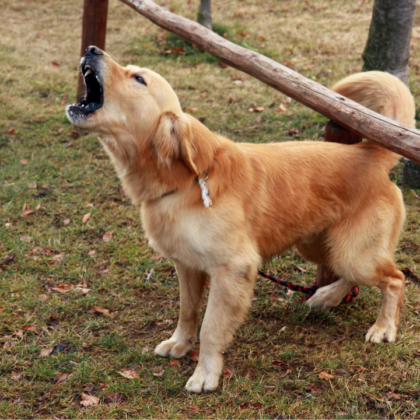
We love our labels. “Reactive.” “Stubborn.” “High drive.” “Shy.” Walk into any training facility or shelter, and you’ll hear these descriptors tossed around as if they actually tell us something meaningful about the dog in front of us.
But here’s the uncomfortable truth: these vague labels are failing our dogs.
The Problem with “Fruit Loop” Descriptions
As I often tell students, if I call a dog “such a wing nut,” friends who know me really well can probably guess what I mean. But if you call me and say “I looked at the video of your dog and frankly, I think he’s a fruit loop”—well, is that good or bad? It’s not particularly useful.
These imprecise descriptions create more confusion than clarity. When a trainer tells you a dog is “reactive,” what does that actually mean? Reactive to what? Visual stimuli? Sounds? Touch? How quickly does the arousal spike? How long does recovery take? Without these specifics, we’re building training plans on quicksand.
When Labels Become Limitations
I’ve watched countless dogs labeled as “stubborn” when the real issue was a mismatch between the handler’s communication style and the dog’s individual temperament. I’ve seen “shy” dogs misunderstood when they were actually showing appropriate caution in overwhelming environments. These labels don’t just fail to help—they actively limit our ability to see what’s really happening.
The most damaging aspect of vague labels is that they focus on what we think is wrong with the dog, rather than understanding how this individual dog experiences and responds to the world.
The Power of Precision
Real assessment requires observable behaviors, not interpretations. Instead of saying a dog is “reactive,” we need to identify the specific triggers, measure the intensity of response, and track recovery patterns. This precision transforms both our understanding and our training approaches.
In CARAT, we score traits on a bidirectional scale from -4 to +4, with 0 as the balanced, functional midpoint. If we look at Arousal, we might see a score of +2. This score has specific, observable parameters which would include details of body expansion, focused attention, possible loss of fine motor control. No guesswork, no interpretation. The score is not relative but based in observable behavior.
From Statistics to Individuals
I say this often, and think it cannot be said enough: when we talk about dogS with an S, that S stands for for statistics. If I make the statement “dogs have much better noses than humans,”it is absolutely true statistically speaking. However, there are individual dogs who cannot find a treat until they step on it, and there are humans who can smell better than those dogs. Likewise, humans are far better at visual detection. Yet many wear glasses and contacts!
The Language Revolution
What we need is a shared vocabulary that describes observable behaviors with precision. When I say a dog scores +3 on visual persistence, other CARAT-trained professionals know exactly what that means. When I describe a dog’s social tolerance as -2, we can predict how they’ll respond to rude handling and plan accordingly.
This language revolution changes everything. Instead of arguing about whether a dog is “dominant” or “submissive” (neither of which are temperament traits), we can discuss their specific use of space patterns, social tolerance levels, and biddability scores.
Building Better Outcomes
Precise assessment leads to better training outcomes, more successful placements, and fewer disappointed families. When we understand that a dog’s “stubbornness” is actually low biddability combined with high persistence for kinesthetic engagement, we can design training that works with their temperament rather than against it.
When we recognize that a dog’s “reactivity” involves specific arousal patterns, recovery times, and trigger sensitivities, we can create management and modification plans that address root causes rather than chasing symptoms.
The framework isn’t just about being more accurate—it’s about being more effective. Every dog deserves to be understood as the unique individual they are, not reduced to a convenient label that tells us nothing useful about how to help them succeed.
Understanding individual temperament isn’t just better assessment—it’s better partnership. And that changes everything for both dogs and the humans who love them.
Ready to learn how to SEE the dog? Discover CARAT assessment training and join professionals and serious dog enthusiasts who understand that every behavior tells a story about the individual. New course opens on February 15th, 2026 and you can take advantage of the Early Bird Dog price of just $325 by registering before January 31st!
About Suzanne Clothier
Suzanne Clothier developed the CARAT (Clothier Animal Response Assessment Tool) in 2007 to help others see what she’s always seen: the unique individual within every dog. Through her Relationship Centered Training methodology, she helps professionals and dedicated dog enthusiasts learn to look beyond behavior to understand temperament.
