
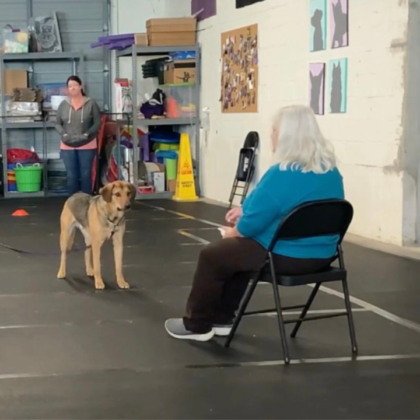
There’s a moment in Treat/Retreat that looks, to the casual observer, like a dog running away. Someone tosses a treat past the dog, deeper into the room, and the dog turns and goes after it. To anyone watching with the usual assumptions about fearful dogs, it might read as: dog got scared, dog fled.
That’s not what’s happening. Not even close.
Understanding why requires paying close attention to one specific thing: the dog’s body as they move.
The Dog Who Is Running From Something Scared
Most people have seen a dog fleeing something that frightened them. The body geometry is unmistakable. The tail tucks or drops. The back rounds. The movement is quick and scurrying, often with that characteristic low posture that says don’t notice me, I’m making myself small, I need to get away from that right now. There’s nothing relaxed about it. The dog’s entire body is organized around escape.
That is FEAR running the show. And it looks a certain way.
The Dog Following a Treat Into Their Safe Zone
Now watch the dog in a well-run Treat/Retreat session. They’ve been at the edge of their safe zone, the distance at which they chose to be present, curious, and able to eat. Notice that word: chose. They weren’t pushed there. They found that spot themselves, and they were comfortable at it. Then the treat lands past them, deeper into their safe zone, and they turn and go after it.
Often the tail comes up. There’s a bounce in the step. The movement is fluid and purposeful, with none of the compressed, scurrying urgency of a dog in flight. This dog is not fleeing. This dog is on a mission. They saw where that treat landed and they’re going to get it.
That’s SEEKING mode. Exploration. Investigation. Curiosity with legs.
Why the Difference Matters
SEEKING and FEAR are not just different moods. They are different neurological states that produce fundamentally different experiences and different learning. A dog operating from FEAR is in survival mode. The goal is escape, not engagement. Learning, real learning, the kind that changes something, is largely inaccessible.
A dog in SEEKING mode is present, curious, and actively processing their environment. That’s the state from which animals learn most effectively. That’s the state from which something new can actually be taken in and integrated.
When the treat lands past the dog and they go after it, we haven’t triggered FEAR. We’ve engaged SEEKING. The dog was already safe; they were at the edge of their safe zone, by their own choice, comfortable enough to be there. Moving deeper into that safe zone doesn’t make them less safe. It makes them more safe. The treat is an invitation to explore a space that already felt manageable, and the dog accepts it.
What You’re Actually Watching
This is why reading body language in Treat/Retreat isn’t optional. It’s the whole point. The treat toss tells you nothing by itself. What the dog’s body tells you as they move is everything.
Fluid movement, tail up or relaxed, a certain purposeful quality to the gait: SEEKING. The dog is fine. The dog is good. The dog is doing exactly what you hoped they’d do.
Tucked tail, compressed posture, that quick scurrying low-to-the-ground movement: something has gone wrong. The dog isn’t in their safe zone. They’re afraid. This is information, and the right response is to adjust, more distance, smaller steps, a different setup.
One of those things looks like progress. One of them looks like progress but isn’t. The body tells you which is which, every time, if you’re watching.
A Dog Moving Toward Something, Not Away From Something
The dog moving deeper into their safe zone isn’t retreating from the person in fear. They’re moving toward the treat in curiosity, into space that already feels safe, going further into safety rather than away from danger.
That’s not a semantic distinction. It describes a completely different internal experience, a completely different neurological state, and completely different learning.
When you see a dog follow that treat with their tail up and a bounce in their step, you’re watching confidence in motion. Not the absence of fear. The genuine presence of something else.
That is what makes Treat/Retreat different.
Treat/Retreat First Aid is an online course for dog owners, shelter and rescue workers, and anyone who works with shy or fearful dogs. Learn more here!
And if you want to go deeper, helping shy or fearful dogs not only gain confidence, but skills – you might be right for Treat/Retreat Certification. On sale for the month of May!
